
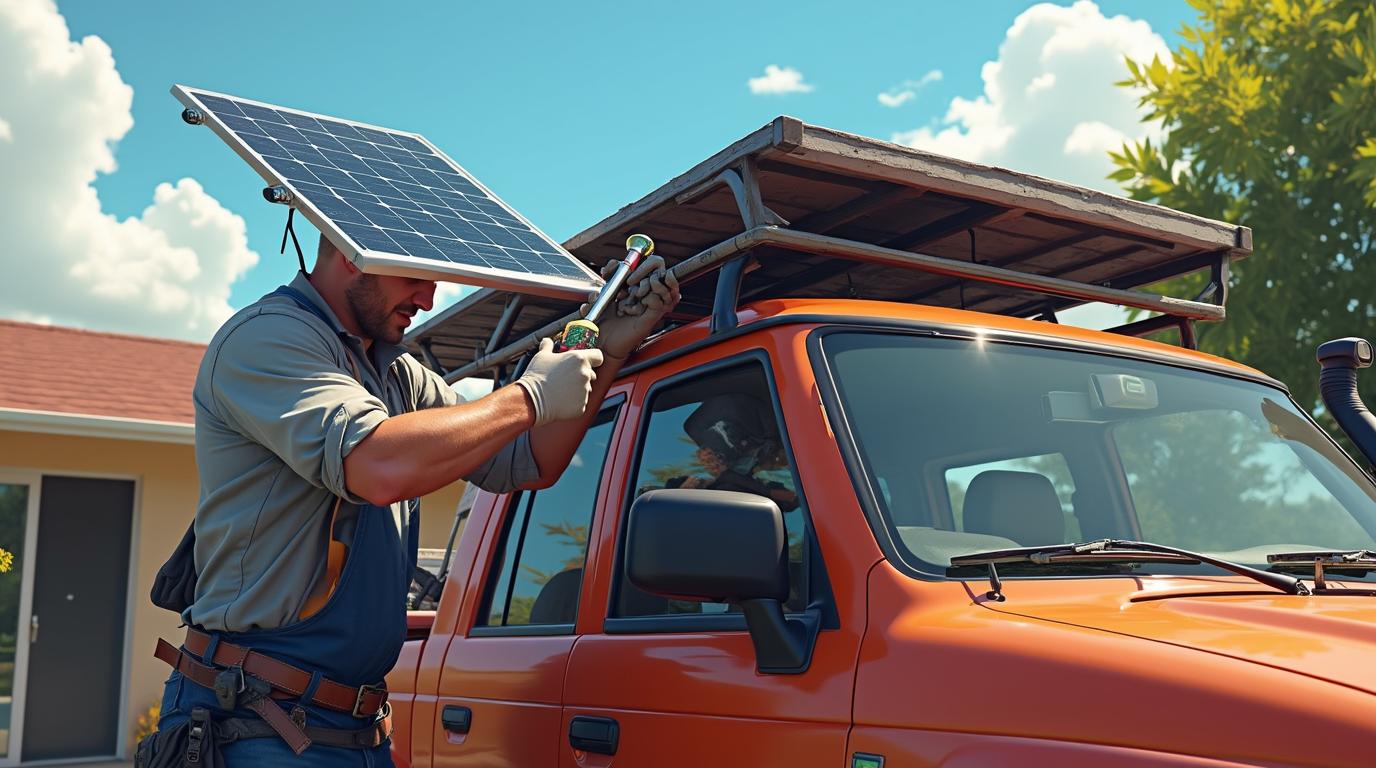
Solar Panel on 4WD Roof: A Roofer's Guide to Safe Installation and Lasting Protection
For over 15 years, I've worked on thousands of roofing projects across Texas. I hold certifications from the National Roofing Contractors Association (NRCA) and am a GAF Master Elite® Contractor. This experience has taught me that a roof is more than just shingles. It's a complex system protecting your entire home. Today, I'm writing to solve a specific problem many adventurous homeowners face. You want to harness solar power for your 4WD adventures. But you're worried about drilling holes in your vehicle's roof. You're concerned about leaks, damage, and voiding warranties. This article exists to answer those exact questions. I'll share the methods we use in professional roofing adapted for your vehicle.
The information here comes from real customer consultations, direct work with solar panel manufacturers, and applying core roofing principles to a different surface. My goal is to give you the confidence to proceed safely or to hire the right professional. We'll cover materials, installation methods, waterproofing, and long-term maintenance. This is not just theory. It's practical advice from the field.
Understanding Your 4WD Roof: It's Not a House, But Principles Apply
Your vehicle's roof is a metal skin, often aluminum or steel. A house roof has decking, underlayment, and shingles. The goal is the same: keep water out. The first step is knowing what you're working with. You must identify your roof's material and structure.
Common 4WD Roof Materials and Their Challenges
Most modern 4WD vehicles have sheet metal roofs. Older models might have fiberglass tops. Each material reacts differently to drilling and weight. Aluminum is lightweight but can be soft. Steel is strong but can rust. Fiberglass is fragile and cracks easily. You must treat each with specific care. Always check your vehicle's manual first. Look for factory mounting points or reinforced areas.
Manufacturers sometimes design roofs with extra strength in certain spots. These are ideal for mounting. Drilling into a random spot can weaken the structure. It can also cause oil-canning, which is a visible distortion of the metal panel. This happens when stress is applied to a thin sheet. We see similar issues on metal commercial roofs. The solution is proper support and distribution of weight.
The Golden Rule: No Direct Penetrations Without a Plan
In roofing, we avoid unnecessary penetrations. Every hole is a potential leak. The same is true for your 4WD. The absolute best practice is to use existing holes. Many vehicles have factory roof rails or tracks. These are designed to handle load. Use them whenever possible. If you must drill, you need a comprehensive sealing strategy. This is not just about silicone caulk. You need a multi-layer defense system.
Think of it like a house roof flashing. A proper flashing has a base, a sealant, and a counter-flashing. For your 4WD, this translates to a butyl rubber tape base, a high-quality polyurethane sealant like Sikaflex-221, and a protective cap or cover. This methodology is proven on millions of commercial roof penetrations for pipes and vents. It will work for your solar panel brackets.
Choosing the Right Solar Panel and Mounting System
Not all solar panels are created equal for mobile use. You need a panel built for vibration, weather, and impact. The mounting system is even more critical. It is the literal bridge between your power source and your vehicle's integrity.
Panel Types: Rigid vs. Flexible
Rigid framed panels are common. They are durable and efficient. Brands like Renogy and Goal Zero make excellent ones. However, they are heavy and sit high on the roof. This increases wind resistance and the risk of catching on branches. Flexible panels, like those from SunPower, are lighter. They can conform slightly to curved roofs. But they can be less efficient and may degrade faster from heat.
From a roofing perspective, a low-profile installation is always better. It presents less wind uplift. Wind can get under a high-mounted panel and create tremendous force. This can tear the mounts right out of the roof. I've seen similar damage on poorly installed satellite dishes on houses. Always prioritize a low, aerodynamic mount.
Mounting Hardware: The Critical Link
The mounts are where your project succeeds or fails. Avoid cheap, thin aluminum brackets. Look for stainless steel or powder-coated steel. They must have a large footprint. A small bracket concentrates force on a tiny area. This can tear through the roof metal over time from vibration. A larger bracket spreads the load. This is the same principle as using a roof jack on a shingle roof.
There are three main types of mounts. Drill-through mounts require holes. They are the strongest but carry the most risk. Clamp mounts attach to gutters or roof rails. They are non-invasive but may not be as secure on rough terrain. Adhesive mounts use a powerful VHB tape. They are great for no-drill setups but require perfect surface preparation. The 3M VHB tape used is the same technology that holds body panels on buses.
The Professional-Grade Installation Process: A Step-by-Step Guide
This is the core of the guide. I will walk you through the process as if we were doing it in my shop. Patience and preparation are everything. Rushing leads to leaks.
Step 1: Surface Preparation (The Most Important Step)
Clean the roof area thoroughly. Use a wax and grease remover. You must get down to bare, clean metal. Any dirt, wax, or clear coat will prevent adhesion. For adhesive mounts, this is absolutely critical. For drill-through mounts, it ensures your sealant bonds properly. Mark your drill points with a center punch. This prevents the drill bit from wandering. Use a sharp metal drill bit and drill slowly to avoid heating the metal.
Step 2: Creating a Waterproof Seal
This is where roofing expertise comes in. For each hole, follow this sequence. First, apply a ring of butyl rubber tape around the hole on the inside of the bracket. Butyl remains flexible for decades. Next, insert the bolt through the bracket and roof. On the underside of the roof, place a large fender washer. This spreads the clamping force. Then, add a second washer with a rubber gasket. Finally, secure the nut.
Now, seal the top. Apply a high-quality polyurethane sealant like Sikaflex-221 over the bolt head and the edge of the bracket. Do not use cheap silicone. It degrades with UV exposure. The sealant should form a smooth, continuous bead with no gaps. It should look like a professionally flashed plumbing vent on a roof. Let it cure fully as per the manufacturer's instructions.
Step 3: Wiring and Cable Management
How you run the wires is just as important. Never let wires dangle or rub against sharp edges. Use adhesive-backed wire conduits or clips. For bringing wires into the vehicle, use an existing grommet if possible. If you must create a new entry point, use a dedicated cable gland. These are sealed fittings designed for this purpose. Brands like Blue Sea Systems make excellent marine-grade glands. This is another place to use sealant generously.
Cost Analysis: What a Real Project Looks Like
Let's break down the costs for a typical 100-watt system. These are approximate figures based on retail prices. A quality 100W rigid panel costs $100-$200. A good mounting kit with stainless brackets is $50-$150. Sealants, tapes, and wiring (cables, connectors, a charge controller) add another $100-$200. If you hire a professional automotive or RV installer, labor could be $300-$500.
The total DIY range is $250 to $550. The professional installation range is $550 to $1,000+. The value of professional work is in the warranty and peace of mind. A mistake that causes a leak could lead to hundreds or thousands in interior damage. This cost-benefit analysis is similar to a homeowner deciding between DIY and pro roof repair.
Long-Term Maintenance and Inspection
Your solar installation is not "set and forget." You must inspect it regularly. This is standard roofing practice. Every few months, check the sealant for cracks or peeling. Look for any rust around the mounts. Ensure all bolts are tight. Vibration can loosen them over time. Check the wires for chafing. Before a big trip, do a thorough inspection. Pour water over the mounts and check inside the vehicle for any drips.
Frequently Asked Questions (From Real Customers)
Will this void my vehicle's warranty?
It might. Drilling into the roof often voids the paint and corrosion warranty for that area. It typically does not void the entire vehicle warranty. Always check your warranty booklet or ask your dealer. Using non-drill methods like gutter clamps or adhesive avoids this issue entirely.
How much weight can my roof hold?
Most 4WD roofs are not rated for dynamic weight (weight while moving). Static weight (parked) is different. A general rule is 150 lbs distributed evenly is safe for most. Always check your owner's manual. A 100W panel and mounts usually weigh under 30 lbs, which is well within limits.
What is the best sealant to use?
For automotive and marine use, polyurethane sealants are best. Sikaflex-221 and 3M 5200 are industry standards. They remain flexible, adhere incredibly well, and resist UV rays. Do not use standard hardware store silicone. It will fail.
Can I park under trees?
You can, but be cautious. Branches can scratch the panel glass and snag on wiring. Debris like leaves and sap will reduce panel efficiency. It's best to keep the panel clear, just like you would keep your house roof gutters clean.
What about car washes and automatic brushes?
Avoid automatic car washes with overhead brushes. They can catch on the panel and mounts. Stick to touchless washes or hand washing. The high-pressure spray is fine and is a good way to test for leaks.
How do I handle hail or extreme weather?
Quality solar panels are rated to withstand 1-inch hail at 50 mph. This information is in the panel's spec sheet. However, severe hail can still cause damage. If you know a storm is coming, covering the panel with a moving blanket is a good precaution. This is similar to protecting a skylight on a house.
Can I remove the panel later without leaving damage?
With adhesive mounts, removal is possible with careful application of heat and fishing line. It will likely damage the vehicle's paint. Drill-through mounts leave holes. You would need to remove the hardware, fill the holes with a body plug and sealant, and then touch up the paint. It is a permanent modification.
Real Project Case Study: The Overlanding Toyota Tacoma
A customer came to me with a new Toyota Tacoma. He wanted a 200W system for a two-week desert trip. He was adamant about no drilling. We used a combination of a Prinsu Design roof rack (which uses factory mounting points) and adhesive mounts for two 100W flexible panels. The roof rack was installed per the manufacturer's instructions, utilizing existing bolt holes in the roof. The panels were then mounted to the crossbars of the rack with 3M VHB tape. The surface was cleaned with alcohol and a special primer.
The wiring was run through a cable gland installed in the third brake light gasket, a common and safe entry point. The project was successful. Two years later, after countless off-road miles, the system is solid. There are no leaks, and the panels show no signs of lifting. This case shows that with careful planning and the right products, a clean, reliable, non-invasive installation is achievable.
Industry Statistics and Safety Data
According to the National Renewable Energy Laboratory (NREL), solar panel failure rates are very low, under 0.05% per year. Most failures are due to poor installation, not the panel itself. A study by the RV Industry Association found that roof leaks are the number one warranty claim for RVs, often stemming from aftermarket accessory installations. This underscores the importance of proper technique. Following building science principles, like those found in the International Residential Code (IRC) for roof penetrations, provides a proven framework for success, even on a vehicle.
Conclusion: Power with Peace of Mind
Installing a solar panel on your 4WD roof is an excellent way to gain energy independence. It must be done with respect for the vehicle's structure. The core principles of roofing—waterproofing, load distribution, and quality materials—apply directly. Whether you DIY or hire a pro, the goal is a system that provides power for years without causing damage.
Your next steps are clear. First, read your vehicle's manual. Second, decide on your power needs and choose a panel. Third, select a mounting strategy that aligns with your comfort level regarding modifications. Fourth, gather all high-quality materials before you start. Finally, take your time during installation. If any step feels beyond your skill, consult a professional RV or automotive upfitter. Your roof is your first line of defense. Treat it with care, and it will reward you with many miles of adventure and free power.