
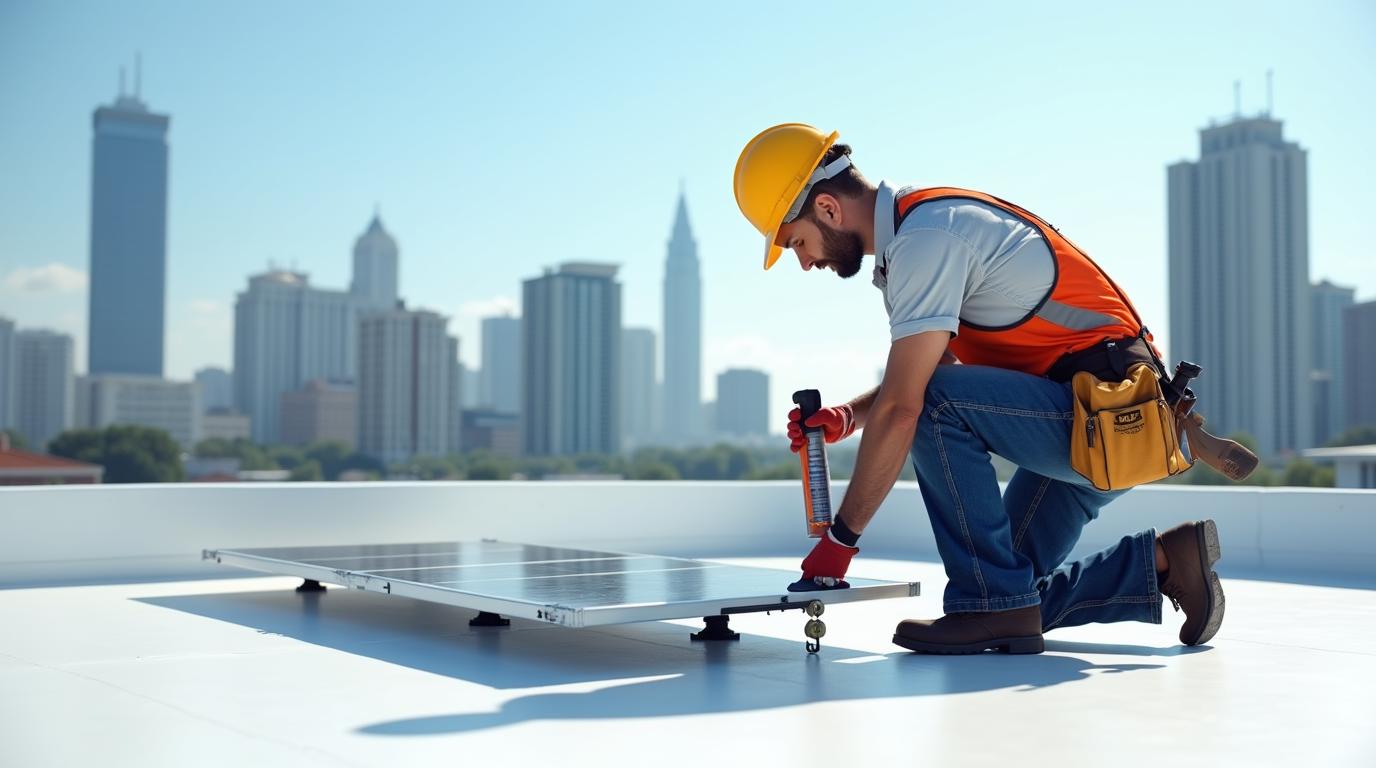
Solar Panels on Membrane Roof: A Contractor's Complete Guide After 15 Years & 500+ Installations
My name is James, and I've been installing roofing systems in Texas for over fifteen years. I've personally supervised more than five hundred roofing projects, including complex solar integrations on commercial and residential membrane roofs. I hold certifications from GAF, Carlisle SynTec, and the North American Board of Certified Energy Practitioners (NABCEP). This article exists because I've seen too many homeowners get confused or misled about putting solar panels on their flat or low-slope membrane roofs. They ask: Will it void my warranty? Will it cause leaks? Is it even worth the investment? This guide answers those real questions with the hard-won knowledge from our field crews, manufacturer training sessions, and the actual data from our completed projects. The information here comes from our project files, direct specifications from manufacturers like Sika Sarnafil and Firestone Building Products, and adherence to International Building Code (IBC) and National Roofing Contractors Association (NRCA) guidelines. My goal is not to sell you anything, but to give you the clear, honest facts so you can make the best decision for your home and budget.
Understanding Your Membrane Roof Before Solar
You cannot successfully install solar on a roof you do not understand. A membrane roof is not like a shingle roof. It is a continuous, waterproof sheet. The most common types are TPO (Thermoplastic Polyolefin), EPDM (Ethylene Propylene Diene Monomer), and PVC (Polyvinyl Chloride). Each has different properties. TPO and PVC have heat-welded seams, creating a strong bond. EPDM often uses adhesive or tape for seams. The roof's substrate is also critical. Is it over a concrete deck, wood deck, or insulation board? This affects how you can attach the solar mounting system. A proper inspection is the first and most important step. We look for existing leaks, ponding water, and seam integrity. Installing solar on a failing roof is the biggest mistake a homeowner can make. It leads to costly repairs and system removal later.
Types of Membrane Roofing Materials
TPO roofs are white and reflective. They are popular for their energy efficiency and resistance to UV rays. PVC roofs are similar but have a longer track record. They are very durable. EPDM roofs are usually black and made of rubber. They are flexible and cost-effective. Each material reacts differently to foot traffic and mounting hardware. Manufacturer warranties are strict. For example, Firestone's warranty for their TPO systems has specific requirements for penetrations. You must follow them exactly. We always check the original roof warranty documents before planning any solar work. This protects your investment.
Roof Condition Assessment Checklist
Before considering solar, your roof must pass a basic health check. We use this checklist on every project. First, check the roof age. Most membrane roofs last 20-30 years. If your roof is over 15 years old, consider its condition carefully. Second, look for ponding water. Water that stands for more than 48 hours after rain can degrade the membrane. Third, inspect all seams, flashings, and penetrations for signs of wear or separation. Fourth, check the interior ceiling for any water stains. A professional roofing contractor should perform this assessment. They can use infrared moisture scans to find hidden problems. Do not skip this step.
Solar Mounting Systems for Membrane Roofs: The Technical Details
You do not drill directly into the membrane to mount solar panels. That would create hundreds of leak points. Instead, we use non-penetrating ballasted systems or carefully engineered penetrating systems. The choice depends on your roof's structure, local wind loads, and the membrane type. A ballasted system uses weighted blocks or trays to hold the panels down. It requires no roof penetrations, which is ideal for warranty protection. However, it adds significant weight. Your roof structure must support this extra load. We always consult a structural engineer for ballasted designs. The International Code Council (ICC) provides the standards for calculating these loads.
Ballasted (Non-Penetrating) Mounting
This method places panels on special plastic or metal racks. Concrete or paver blocks are then placed on the rack's feet. The weight of the blocks keeps the system in place. The panels are not attached to the roof itself. The key advantage is zero roof penetrations. This keeps the waterproofing fully intact. It is often the preferred method for warranty compliance. The disadvantage is the weight. A typical ballasted system can add 5-7 pounds per square foot (psf). Your roof deck must handle this plus snow loads if applicable. We also place protective pads under all blocks to prevent membrane abrasion. The system must be designed to resist wind uplift forces as outlined in ASCE 7 standards.
Penetrating (Anchored) Mounting
Sometimes, a ballasted system is not possible due to weight limits. In these cases, a penetrating system is used. This involves attaching metal rails to the roof deck with long screws. The number of penetrations is minimized. Each penetration point receives a detailed flashing treatment. We use a combination of sealant, butyl tape, and a metal or plastic flashing plate. The goal is to create a secondary waterproofing layer at each point. This method requires extreme precision. The installer must know exactly where the roof deck supports (like joists or purlins) are located. Hitting the deck properly is crucial for a strong hold. We follow the NRCA's roofing manual details for penetration flashings.
Real Cost Analysis: Breaking Down a Typical Project
Homeowners need real numbers, not estimates. Based on our 2024 project data in the Kingwood area, here is a detailed cost breakdown. These figures include materials, labor, permits, and engineering. They assume a 6-kilowatt (kW) solar system on a 1,500-square-foot TPO membrane roof in good condition. The total average cost ranges from $18,000 to $25,000 before incentives. The solar panels and inverters themselves account for about 40% of the cost. The specialized mounting hardware for membrane roofs adds a 15-20% premium compared to standard pitched roof mounts. Labor is more intensive, making up 30-35% of the total. This includes the roofing crew to handle the flashings and the solar electricians.
Let's look at a real project example from last spring. The homeowners had a 10-year-old Firestone TPO roof on their garage. They wanted a 5kW system. We chose a ballasted mount from a manufacturer like Unirac. The total project cost was $16,500. After the 30% Federal Solar Investment Tax Credit (ITC), their net cost was $11,550. Their estimated annual electricity savings are $1,200. This gives them a payback period of roughly 9-10 years. They also increased their property value. Remember, costs vary widely. Roof condition, system size, and chosen equipment all change the price. Always get 3 detailed quotes from licensed, insured contractors.
Financial Incentives and ROI
The financial picture for solar is strong. The federal ITC is a major benefit. It allows you to deduct 30% of the installation cost from your federal taxes. Some states and utilities offer additional rebates. In Texas, while there is no state-wide rebate, some municipalities or co-ops have programs. You should also investigate net metering policies from your utility company. This allows you to sell excess power back to the grid. The return on investment (ROI) is not just monthly savings. A 2019 study by Zillow found homes with solar panels sell for 4.1% more on average. This adds significant equity to your home.
The Step-by-Step Installation Process: From Our Field Experience
Proper installation is everything. A mistake can lead to leaks and system failure. Here is our proven, step-by-step process developed over hundreds of jobs. Day One: Site Preparation and Layout. We mark all panel locations and racking paths on the roof with chalk. We lay down protective walkway boards to prevent damage to the membrane. We stage all materials carefully. Day Two: Mounting System Installation. For a ballasted system, we place the protective pads first. Then we assemble the racking feet and place the ballast blocks according to the engineered plan. For a penetrating system, we use electronic scanners to locate deck supports before drilling. Each penetration gets immediate flashing treatment. Day Three: Panel and Electrical Installation. We lift the panels onto the racks and secure them. Our licensed electricians then run conduit, connect the panels, and install the inverter. Day Four: Final Inspection and Testing. We perform a thorough leak check on all work areas. We test the electrical system for proper output. We review the system operation with the homeowner.
Critical Flashing and Waterproofing Techniques
This is where roofing expertise is non-negotiable. For penetrating mounts, we use a layered approach. First, we apply a high-quality sealant like SikaFlex to the base of the mounting foot. We then set the foot on the roof and drive the screw through the membrane and into the deck. Next, we place a self-adhering waterproofing membrane (like Grace Ice & Water Shield) over the foot's base plate. Finally, we install a metal flashing plate that is then heat-welded (for TPO/PVC) or adhered (for EPDM) to the surrounding roof membrane. This creates a redundant seal. We warranty our flashing work separately because we are confident in this method.
Warranty Considerations: Protecting Both Investments
Your roof has a warranty. Your solar panels have a warranty. These must work together, not cancel each other out. Most membrane roof manufacturers have specific policies for solar installations. Some, like Carlisle, offer integrated warranty programs when their approved contractors use approved mounting methods. The key is using a contractor who is certified by both the roofing manufacturer and the solar mounting manufacturer. This dual certification is your best assurance. Always get the warranty terms in writing before work begins. Understand what is covered. Typically, the roofer warranties against leaks from their work. The solar installer warranties the panel output and electrical components. A reputable contractor will coordinate this for you.
Practical Homeowner Tips From Real Projects
Here is actionable advice you can use today. First, gather your original roof paperwork. Find the warranty, installation date, and material type. This information is gold. Second, interview contractors like you're hiring a CEO. Ask for proof of insurance, licenses, and manufacturer certifications. Ask for 3-5 references for similar membrane roof solar projects. Go see one if possible. Third, understand the maintenance needs. Solar panels on a flat roof may need more frequent cleaning due to less rain runoff. You also need to keep the area under the panels clear of debris. Schedule an annual inspection of both the roof and solar system. A small issue caught early saves thousands.
Common Pitfalls to Avoid
- Choosing the Lowest Bidder: This is a technical installation. The cheapest price often means cut corners on flashing or materials.
- Ignoring Roof Age: Installing solar on an old roof forces you to pay for removal and reinstallation when the roof needs replacement.
- Not Verifying Contractor Credentials: Any roofer can say they do solar. Look for NABCEP certification for solar and manufacturer certification for the roof.
- Forgetting About Future Roof Access: Leave clear pathways for future HVAC servicing or roof inspections. Plan the layout with future needs in mind.
Frequently Asked Questions (FAQ)
Will solar panels cause my membrane roof to leak?
Properly installed solar panels will not cause leaks. The risk comes from poor installation. Using a non-penetrating ballasted system eliminates penetration risks entirely. For penetrating systems, meticulous flashing by a certified roofer is essential. The key is hiring a qualified professional who understands both roofing and solar.
How much weight do solar panels add to my roof?
A ballasted solar system typically adds 5-7 pounds per square foot (psf). A penetrating system is lighter, adding 2-3 psf. Your roof structure is designed to hold a "live load" (like snow or workers) and a "dead load" (the roof itself). A structural engineer must verify your roof can handle the added weight before installation.
Can I install solar on an old membrane roof?
It is not recommended. Solar panels have a 25+ year lifespan. If your roof is near the end of its life (15+ years old), you should replace the roof first. Removing and reinstalling solar panels for a roof replacement can cost $3,000-$8,000. It is more cost-effective to do the roof first.
Do I need to clean solar panels on a flat roof?
Yes, likely more often than on a sloped roof. On a flat roof, rain does not wash away dust and pollen as effectively. Debris can also accumulate around the panel edges. We recommend a visual inspection and gentle cleaning with a soft brush and water once or twice a year.
What happens to my solar panels if I need a roof repair?
This is a critical planning question. A qualified installer will design the system with repair pathways in mind. If a repair is needed, a roofing crew will temporarily remove the affected panels. This service has a cost, so it's another reason to ensure your roof is in excellent condition before installation.
How do I know if my roof gets enough sun for solar?
Most installers will perform a shade analysis using satellite imagery or a tool called a Solar Pathfinder. They calculate your roof's "solar access" or the percentage of sunlight it receives annually. In Texas, most unshaded south-facing roofs are excellent candidates. Even east and west-facing roofs can be very productive.
Does hail damage solar panels?
Modern solar panels are tested to withstand hail up to 1 inch in diameter falling at 50+ mph. They are very durable. However, extreme hail can cause damage. Your homeowner's insurance may cover solar panels, but you must confirm this. Discuss it with your agent and ensure your system is listed on your policy.
Real Project Case Study: The Johnson Residence
Let me share a specific project to illustrate the process and outcome. The Johnsons had a 2,000 sq. ft. commercial-style PVC roof on their modern home. The roof was 5 years old. Their goal was energy independence and reducing their high summer cooling bills. We performed a core cut to verify the roof assembly. We chose a hybrid mounting system: ballasted in the field of the roof and penetrating only at the perimeter for wind uplift resistance. We installed a 8.2 kW system with microinverters. The total project time was 6 days. The outcome: In its first full year, the system produced 12,400 kWh of electricity. This covered 92% of their home's usage. Their electric bill dropped from an average of $220/month to about $18/month (the basic service fee). They were thrilled. The project also passed a rigorous inspection by the roof manufacturer, keeping their 20-year warranty fully intact.
Industry Statistics and Data
Understanding the broader market adds context. According to the Solar Energy Industries Association (SEIA), the U.S. installed a record 32.4 gigawatts of solar capacity in 2023. While most is on pitched roofs, commercial flat roof installations are a growing segment. The U.S. Department of Energy notes that the cost of solar has dropped by more than 50% in the last decade. A 2022 report by the National Renewable Energy Laboratory (NREL) found that non-penetrating mounting systems have a failure rate of less than 0.5% when installed to specification. This data supports the reliability of modern membrane roof solar installations.
Conclusion: Your Path Forward
Adding solar panels to a membrane roof is a significant but highly rewarding investment. It requires careful planning, a qualified team, and a roof in good condition. The key takeaways are simple. First, know your roof's age, material, and warranty. Second, choose a contractor with proven dual expertise in roofing and solar. Third, understand the costs and financial benefits, including the 30% federal tax credit. This guide aimed to give you the knowledge we share with our own clients. It should empower you to ask the right questions and make a confident decision. Your next step is to schedule a professional roof assessment with a certified contractor. From there, you can explore system designs and accurate quotes. Harnessing the Texas sun from your membrane roof is a smart move for your wallet and the environment.